

Is It Legal for a Pregnant Woman to Travel to the United States?
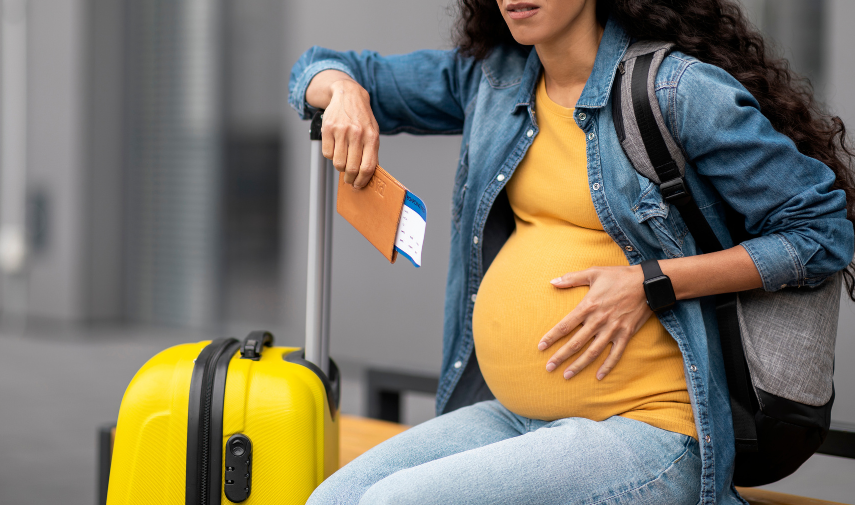
The Trump administration’s new crackdown on so-called “birth tourism” puts an uncomfortable question at the center of the immigration debate: When is a pregnant woman’s trip to the United States legitimate tourism, and when does it become fraud?
President Donald Trump signed an executive order on August 6 instructing the Departments of State and Homeland Security to strengthen measures against foreign women who enter the country on nonimmigrant visas for the purpose of giving birth in the United States.
A week later, the State Department also announced a special task force to identify these cases, revoke visas, and pursue the networks that facilitate them. Within days, more than 600 visas had already been revoked.
However, it is worth clarifying that, according to attorneys, being pregnant, traveling to the United States, or even giving birth here does not, by itself, constitute a federal crime.
Since 2020, however, consular rules have established that a B visa cannot be granted when the primary purpose of the trip is to give birth in order to obtain U.S. citizenship for the child.
And if a person lies about the purpose of the trip, deliberately conceals material information, or presents false documents to obtain a visa or enter the country, the matter can go from an immigration violation to a case of fraud.
In those cases, the government can deny or revoke a visa, deny entry, or initiate immigration proceedings.
The new order also provides, within the available legal authority, for measures that could include permanent entry bans for those who participate in these schemes.
A finding of fraud or deliberate misrepresentation can also result in inadmissibility under immigration law.
Organizers of birth tourism schemes, some of which advertise their services publicly, have also received prison sentences for conspiracy, money laundering, and fraud.
The key, therefore, should not be the pregnancy itself, but the evidence.
A pregnant woman may have perfectly legitimate reasons to travel: vacation, visiting family, or receiving medical treatment.
To distinguish these cases from a fraudulent scheme, experts recommend that authorities focus on transparency and consistency: the stated purpose of the trip, intended length of stay, reservations and itinerary, financial resources, legitimate medical arrangements, intention to pay the costs, and evidence of plans to return to the country of residence.
Pregnancy may justify additional questions, but it should not be treated as automatic proof of fraud. The reasonable approach is to investigate conduct and statements, not presume guilt based on a natural and visible physical condition.